Rating: 3/5
This adaptation is more of a meditative experience—a grounded, realistic take on Odysseus’s return from Troy, far removed from the spectacle and fantasy. It’s not a film that seeks to impress with action or grandeur but rather reflects on time, loss, and the fragility of homecoming.
Directed by Uberto Pasolini, and starring Ralph Fiennes and Juliette Binoche as the king and queen of Ithaca, “The Return” doesn’t aim to surprise with plot twists. After all, this is a story that has been told countless times on the big screen and stage. Maybe that is exactly the challenge here—how do you retell a mythical story that everyone knows and still make it feel fresh and meaningful? Pasolini’s answer is to strip it back. No grand entrances. No gods. No monsters. Just man, memory, and the weight of time.

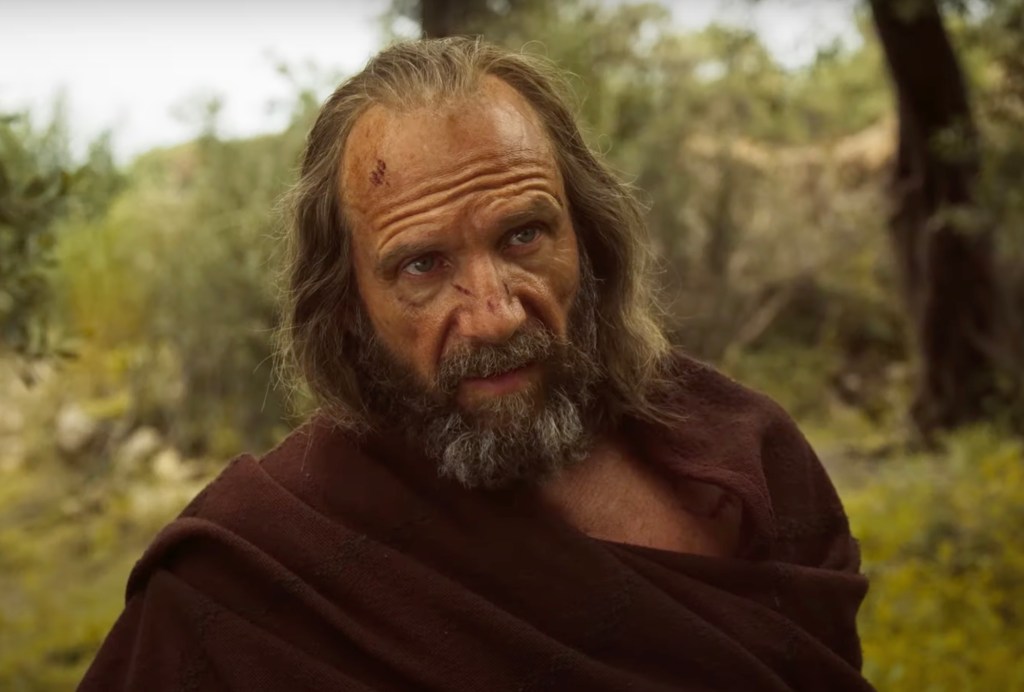
The story begins after the Greeks have won the Trojan War. Odysseus returns home to Ithaca decades later, unrecognizable and aged, both physically and spiritually. He is still a soldier, but no longer the man who left. He is a man who has lost and endured, and now must find his purpose again. For most of the island, he’s long dead, a ghost beneath the waves. But his wife, Penelope, has been fighting her own silent war for years, even after the war in Troy ended—a war of patience, loneliness, and quiet resilience. She has been holding the kingdom together while surrounded by men who want to take what little remains.
Everyone around her, including her own son, urges her to move on and choose a new king to marry from among the Suitors—men who circle her like vultures, each with their own ambition and agenda. They are less interested in love and more concerned with legacy, power, and on Penelope. And yet, she waits. Not because she’s certain Odysseus is alive, but because her faith is stronger than logic. She waits, hoping, resisting.
“The Return” is about what happens when Odysseus finally reappears. How does he confront a home that is no longer his in the way he remembers? A home in ruins, emotionally and morally. Can he reclaim not just his throne, but the trust of his people and the bond with his wife and son, who have all changed in his absence?
Ralph Fiennes and Juliette Binoche carry the film with quiet intensity, making us feel as though we’re watching the real Odysseus and Penelope. They settle effortlessly into their roles. Ralph, with his solid build for his age and weathered expression, perfectly embodies an older, war-worn Odysseus. It’s a tailor-made role that allows his subtlety to shine without needing grand gestures or loud declarations. Juliette, on the other hand, matches him in restraint. Her eyes speak volumes, even though her lines are few. There’s a quiet power in her presence, and she communicates so much with silence. Another standout is Marwan Kenzari as Antinous. His performance is equally nuanced, and he delivers with the same controlled strength as the English Patient pair, adding yet another layer of subtlety to the film.
One of the most striking aspects of the film is the camera work. Pasolini chooses to shoot characters up close—tight frames on weathered faces, tired eyes, and restrained emotions. It’s an unusual choice for a historical drama, where the tendency is to lean into wide, sweeping visuals. Here, the camera doesn’t care about grandeur—it focuses on truth, discomfort, and intimacy. These characters aren’t ancient gods or statues—they’re people worn down by time, grief, and loss. Still, the emotions are not overplayed. They remain grounded, and for some, maybe too grounded. That may be appealing to some, appalling to others.
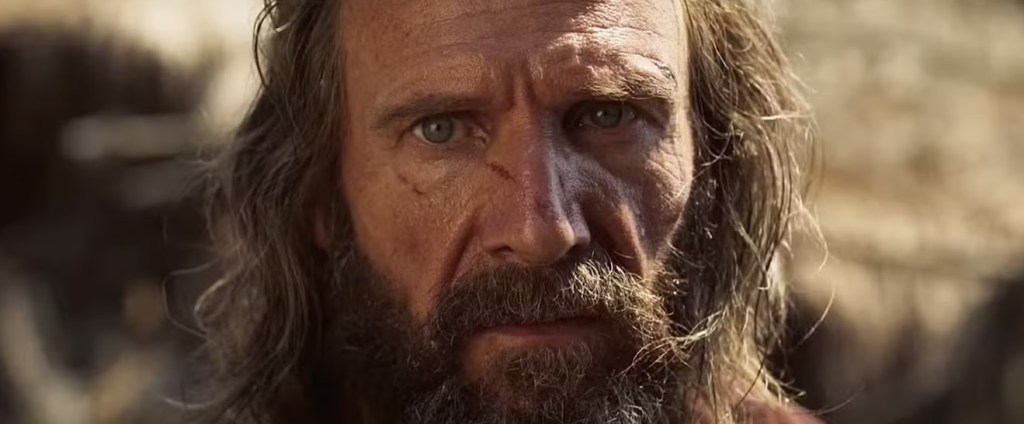
The film is remarkably minimalistic. No CGI monsters. No elaborate fantasy elements. Just real locations, real textures, and a rawness that strips the myth down to its human core. The absence of spectacle is what makes the film unique. The minimalism in “The Return” comes through in every aspect of its production—fewer characters, limited set-pieces, and authentic settings that ground the story in something tangible. The entire film carries the pacing and aspect ratio of a neatly crafted high-budget Indie film.
While this grounded approach is admirable and adds authenticity, the emotional weight doesn’t always translate fully to the audience. That’s mostly due to the very same groundedness. Key moments—like when the old nurse realises the king has finally returned, or when the queen instructs her son to hand the bow to his father—are shot with poetic care. The lighting is soft, the staging is quiet, and the emotions are present, but they pass by too quickly. These are scenes that should have hit harder, that carried deep narrative weight, but they feel like gentle ripples instead of waves. Films of this kind often risk becoming too quiet, too introspective, and can feel less accessible to broader audiences. Yet, despite this, “The Return” still manages to hold attention—even if only at a low, steady throttle.
The score is subdued, and rightly so. This isn’t a sweeping, cinematic adventure. The music simply supports the emotions when needed, stepping aside when the atmosphere and the performances speak louder. It appears when it needs to, and disappears when it doesn’t—never overstaying its welcome or trying to manipulate the audience. Maybe Christopher Nolan’s upcoming Odyssey will offer a more mainstream, high-concept version of the same myth, packed with spectacle and wide appeal. But “The Return” gives us something else. It offers a slow, patient, and reflective look at a man trying to return—not just to a place, but to a version of himself that may no longer exist.
This isn’t for everyone. It’s not designed to be. But for those who appreciate quiet, grounded cinema that respects its source material while daring to reimagine it through a more human lens, “The Return” is a deeply rewarding experience.
 Incomplete Reviews