
Rating 3/5
A movie shows movie stars trying to be a part of a movie — through a movie.
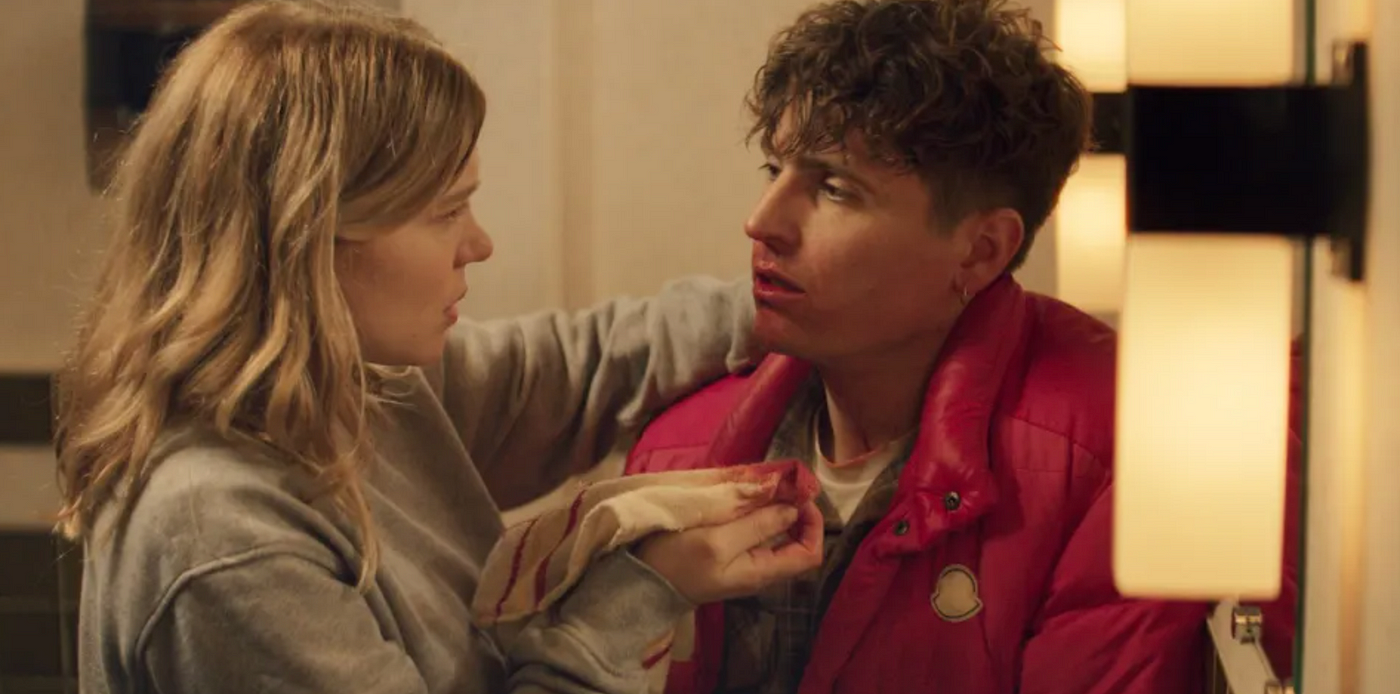
Quentin Dupieux, known for his signature brand of quirky, surreal humour, minimalist casts, and theatrical staging, returns with another delightfully absurd meta-film. In “The Second Act” (French titled: Le Deuxième Acte), Quentin Dupieux weaves two layered narratives — one about actors making a film, and the other exploring the off-screen lives of those same actors, who are also characters within the film itself.
The plot is deliberately layered and chaotic — probably on purpose. Two main storylines unfold simultaneously, folded into each other like a cinematic mille-feuille. It’s the kind of setup were keeping track of what’s “real” and what’s “in-film” is both part of the confusion and the fun.
Léa Seydoux plays an actress named Florence, who, within the film, is playing a character in a movie directed by Artificial Intelligence. Her in-film character is a woman hopelessly in love with a “man”, played by David; Florence, struggles to keep her acting career. David, also an actor within the AI-generated movie, is played by Louis Garrel. Louis carries both calm and composed yet always having a fear of being politically correct roles. Florence’s character is obsessive to the point of emotional suffocation — checking in on her “boyfriend” every 30 minutes. But the “man” is not attracted to her, doesn’t know how to confront her directly. So, he recruits his friend to intervene — played by Willy (who is played by Raphaël Quenard). The friend character is confused: why would his friend push away someone so in love with him? His skepticism builds into curiosity, and eventually, after some back and forth, he agrees to meet the girl.
Meanwhile, the girl brings along her “father” — a talkative banker, played by Guillaume. But Guillaume is also a fictional actor inside the larger narrative, played by Vincent Lindon. And mid-shoot, Guillaume gets offered a role in a Paul Thomas Anderson film — creating yet another meta-layer within the story. So, now we’re watching actors playing actors playing characters in a film directed by AI, with one of them being poached for another movie, all within a film.

What happens when all four characters meet? What happens when the actors playing these characters start bleeding into their roles, and their roles bleed into them? How the actors suffer from their own acting life and put up with other actors but aiming to finish playing their characters. That is all about of “The Second Act”.
Each of the lead actors takes on two personas, and they switch between them seamlessly and convincingly. The entire story takes place over the course of a single day, and within just a few hours. The costumes and makeup stay the same, the personalities shift quickly. The transitions aren’t there to trick the viewer or showcase cleverness — they’re there to highlight process. In a way, it feels almost like a documentary on performance.
Unlike most modern satires that lean into jittery handheld camera work and snap zooms (like from “In the Loop” or “Succession”), Dupieux stays true to his style. He uses clean, composed shots — often dolly-based — that give a strangely polished clarity to the chaos unfolding onscreen. It adds to the surrealism, creating the feeling that everything is controlled, even when what we’re watching feels entirely unhinged.
It may feel a bit confusing at first — since the first act only unfolds during the final act of “The Second Act”. The film opens with a waiter unlocking a café called “Le Deuxième Acte”, setting the stage in a literal sense. The location, like the script, is minimal yet loaded. The conversation-heavy satire unfolds within that confined space, as we’re gradually pulled into the absurdities of both the story and the filmmaking process itself. The dialogue is dense and layered — not necessarily philosophical or logical, but more about exposing the emotional chaos of each character — in a Quentin Dupieux’s humour.
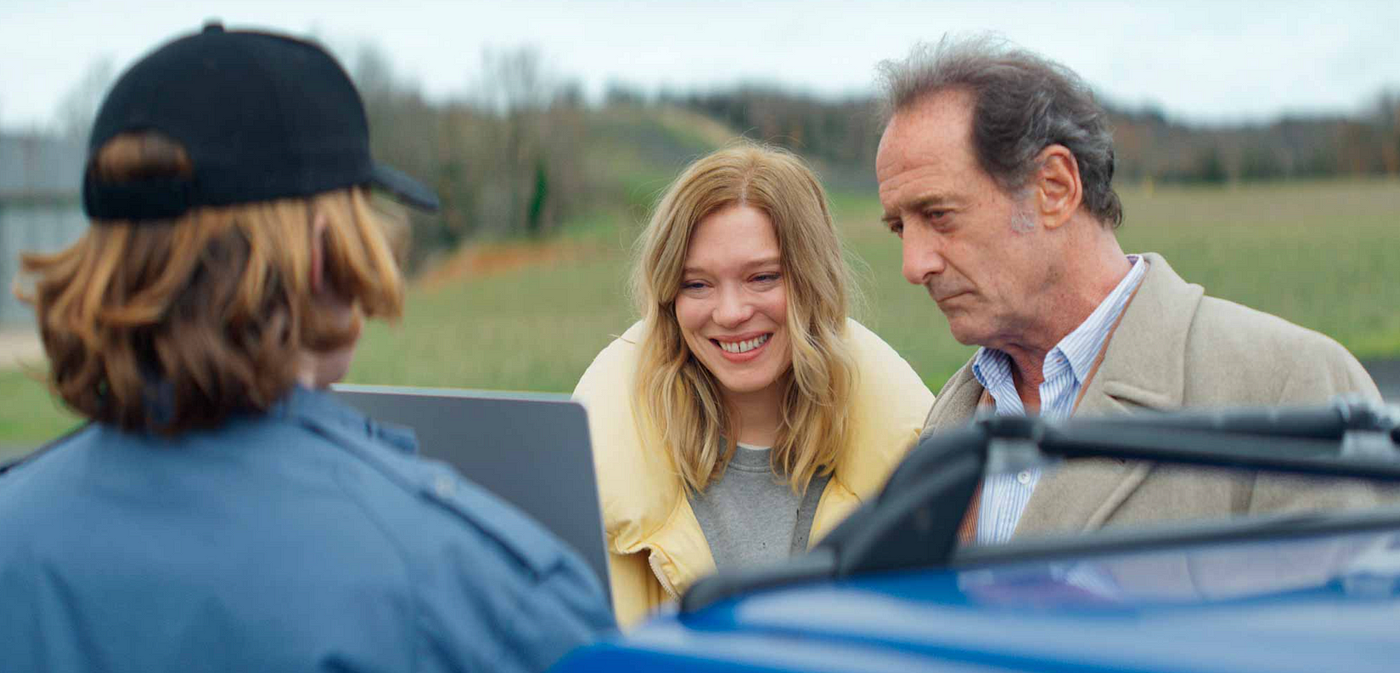
What’s more fascinating is how different each actor is from the character they’re playing within the film. For instance, Guillaume, the character, is homophobic. But Vincent Lindon’s in-film actor reveals that he’s gay — adding tension between performance and identity, and again showing how messy and performative “truth” can be when filtered through art.
The film shows that AI has the potential in generating a film on its own, hires people, give the instructions and make decisions to cut actor’s fees because of their inabilities and faults. We are not too far away to this idea with rapid evolution of Generative AI (GenAI), Large Language Models (LLMs) and Agentic AIs. One of the most powerful scenes is subtle but chilling. The AI director refuses to accept feedback from the actors — no matter how sincere or insightful; whether the suggestions were good or bad, whether it’s a compliment or a doubt, the AI simply ignores it. Once the system has authority, it shuts out human emotion entirely. That’s when the satire hits hardest — not through slapstick or one-liners, but through a quiet reminder of what the industry might look like if AI becomes the ultimate auteur.
“The Second Act” is messy, brilliant, confusing, and strangely prophetic. It may not make you laugh out loud, but it will absolutely make you think twice about what comes after the first act. The humour maybe dry, self-aware, and always one step ahead. And while it might not be for everyone, it is unmistakably a Quentin Dupieux experience.
 Incomplete Reviews