Category: Reviews

  • The Second Act (2024) Review: An Inception-Level Parody of AI, Cinema, and Itself

    The Second Act (2024) Review: An Inception-Level Parody of AI, Cinema, and Itself

    Rating 3/5

    A movie shows movie stars trying to be a part of a movie — through a movie.
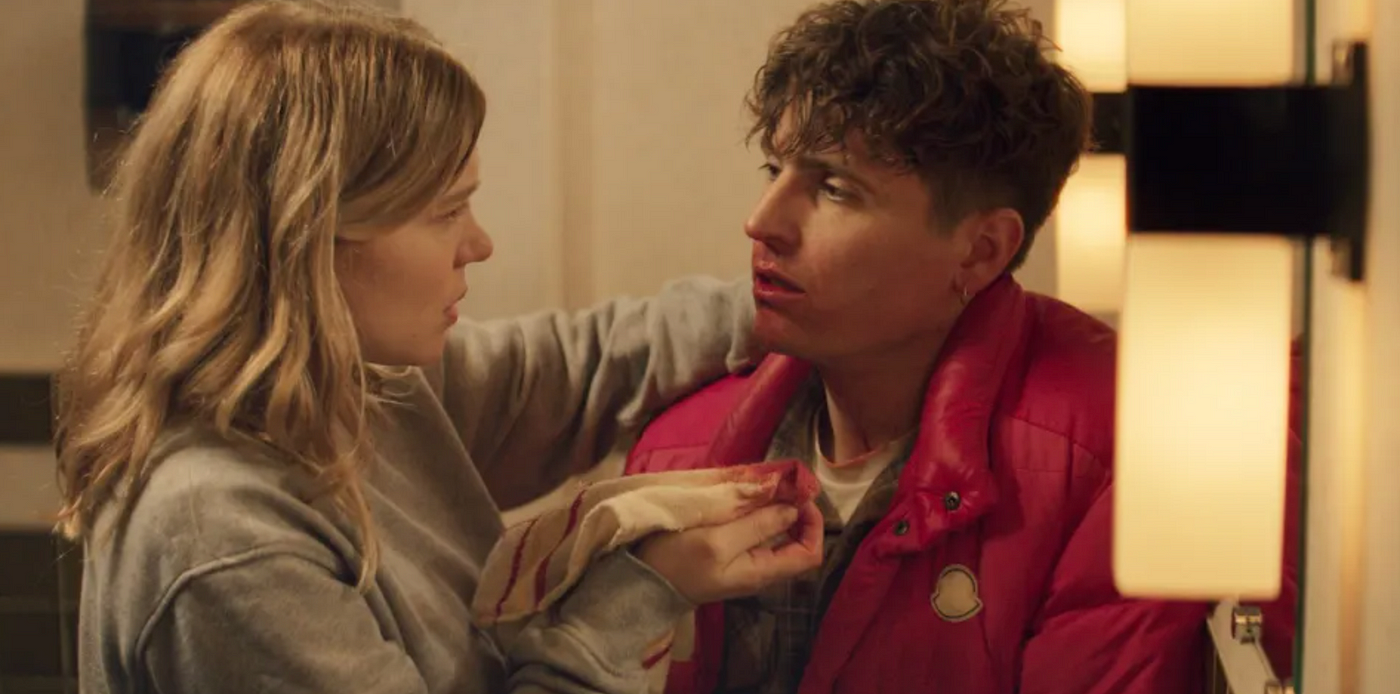
    Léa Seydoux (left) as Florence and Raphaël Quenard (right) as Willy from “The Second Act (2024)”

    Quentin Dupieux, known for his signature brand of quirky, surreal humour, minimalist casts, and theatrical staging, returns with another delightfully absurd meta-film. In “The Second Act” (French titled: Le Deuxième Acte), Quentin Dupieux weaves two layered narratives — one about actors making a film, and the other exploring the off-screen lives of those same actors, who are also characters within the film itself.

    The plot is deliberately layered and chaotic — probably on purpose. Two main storylines unfold simultaneously, folded into each other like a cinematic mille-feuille. It’s the kind of setup were keeping track of what’s “real” and what’s “in-film” is both part of the confusion and the fun.

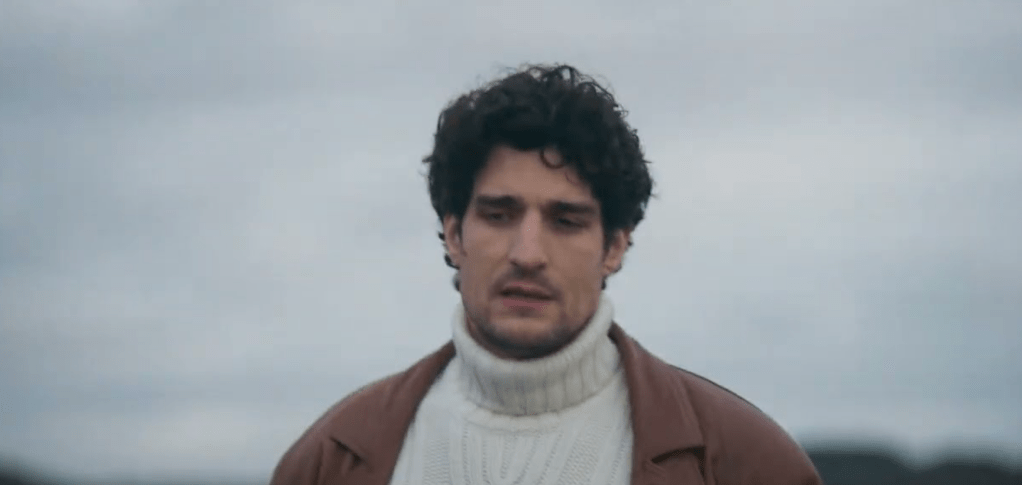
    Léa Seydoux plays an actress named Florence, who, within the film, is playing a character in a movie directed by Artificial Intelligence. Her in-film character is a woman hopelessly in love with a “man”, played by David; Florence, struggles to keep her acting career. David, also an actor within the AI-generated movie, is played by Louis Garrel. Louis carries both calm and composed yet always having a fear of being politically correct roles. Florence’s character is obsessive to the point of emotional suffocation — checking in on her “boyfriend” every 30 minutes. But the “man” is not attracted to her, doesn’t know how to confront her directly. So, he recruits his friend to intervene — played by Willy (who is played by Raphaël Quenard). The friend character is confused: why would his friend push away someone so in love with him? His skepticism builds into curiosity, and eventually, after some back and forth, he agrees to meet the girl.

    Meanwhile, the girl brings along her “father” — a talkative banker, played by Guillaume. But Guillaume is also a fictional actor inside the larger narrative, played by Vincent Lindon. And mid-shoot, Guillaume gets offered a role in a Paul Thomas Anderson film — creating yet another meta-layer within the story. So, now we’re watching actors playing actors playing characters in a film directed by AI, with one of them being poached for another movie, all within a film.

    Louis Garrel as David from “The Second Act (2024)”

    What happens when all four characters meet? What happens when the actors playing these characters start bleeding into their roles, and their roles bleed into them? How the actors suffer from their own acting life and put up with other actors but aiming to finish playing their characters. That is all about of “The Second Act”.

    Each of the lead actors takes on two personas, and they switch between them seamlessly and convincingly. The entire story takes place over the course of a single day, and within just a few hours. The costumes and makeup stay the same, the personalities shift quickly. The transitions aren’t there to trick the viewer or showcase cleverness — they’re there to highlight process. In a way, it feels almost like a documentary on performance.

    Unlike most modern satires that lean into jittery handheld camera work and snap zooms (like from “In the Loop” or “Succession”), Dupieux stays true to his style. He uses clean, composed shots — often dolly-based — that give a strangely polished clarity to the chaos unfolding onscreen. It adds to the surrealism, creating the feeling that everything is controlled, even when what we’re watching feels entirely unhinged.

    It may feel a bit confusing at first — since the first act only unfolds during the final act of “The Second Act”. The film opens with a waiter unlocking a café called “Le Deuxième Acte”, setting the stage in a literal sense. The location, like the script, is minimal yet loaded. The conversation-heavy satire unfolds within that confined space, as we’re gradually pulled into the absurdities of both the story and the filmmaking process itself. The dialogue is dense and layered — not necessarily philosophical or logical, but more about exposing the emotional chaos of each character — in a Quentin Dupieux’s humour.
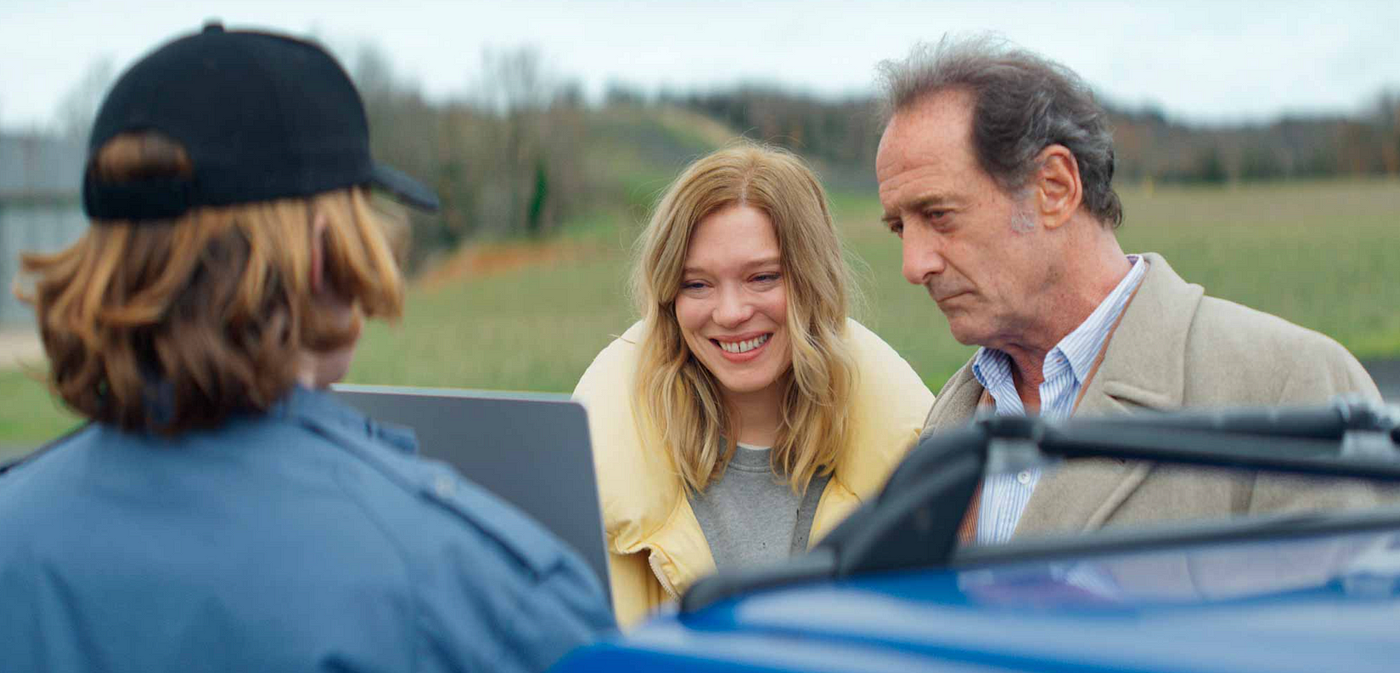
    Léa Seydoux (left) as Florence and Vincent Lindon (right) as Guillaume from “The Second Act (2024)”

    What’s more fascinating is how different each actor is from the character they’re playing within the film. For instance, Guillaume, the character, is homophobic. But Vincent Lindon’s in-film actor reveals that he’s gay — adding tension between performance and identity, and again showing how messy and performative “truth” can be when filtered through art.

    The film shows that AI has the potential in generating a film on its own, hires people, give the instructions and make decisions to cut actor’s fees because of their inabilities and faults. We are not too far away to this idea with rapid evolution of Generative AI (GenAI), Large Language Models (LLMs) and Agentic AIs. One of the most powerful scenes is subtle but chilling. The AI director refuses to accept feedback from the actors — no matter how sincere or insightful; whether the suggestions were good or bad, whether it’s a compliment or a doubt, the AI simply ignores it. Once the system has authority, it shuts out human emotion entirely. That’s when the satire hits hardest — not through slapstick or one-liners, but through a quiet reminder of what the industry might look like if AI becomes the ultimate auteur.

    “The Second Act” is messy, brilliant, confusing, and strangely prophetic. It may not make you laugh out loud, but it will absolutely make you think twice about what comes after the first act. The humour maybe dry, self-aware, and always one step ahead. And while it might not be for everyone, it is unmistakably a Quentin Dupieux experience.
  • The Return (2024) Review: A Minimalistic Adaptation of a Mythical Journey

    The Return (2024) Review: A Minimalistic Adaptation of a Mythical Journey

    Rating: 3/5

    This adaptation is more of a meditative experience—a grounded, realistic take on Odysseus’s return from Troy, far removed from the spectacle and fantasy. It’s not a film that seeks to impress with action or grandeur but rather reflects on time, loss, and the fragility of homecoming.

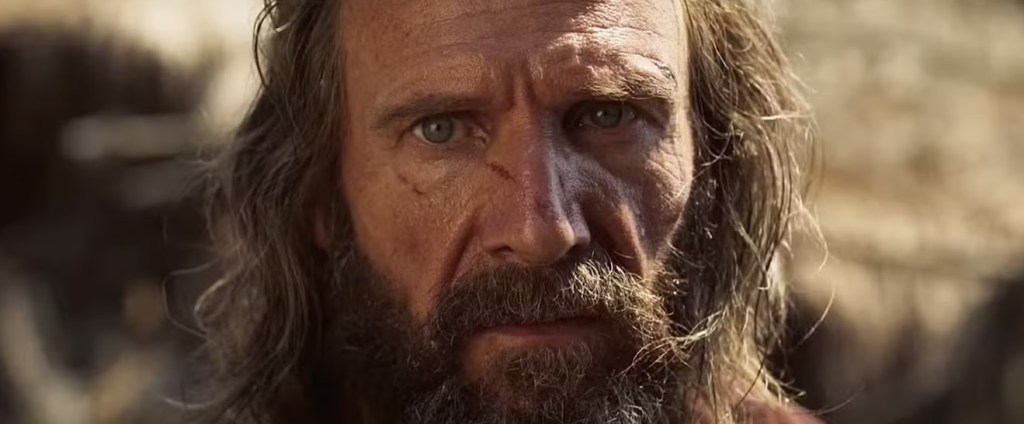
    Directed by Uberto Pasolini, and starring Ralph Fiennes and Juliette Binoche as the king and queen of Ithaca, “The Return” doesn’t aim to surprise with plot twists. After all, this is a story that has been told countless times on the big screen and stage. Maybe that is exactly the challenge here—how do you retell a mythical story that everyone knows and still make it feel fresh and meaningful? Pasolini’s answer is to strip it back. No grand entrances. No gods. No monsters. Just man, memory, and the weight of time.

    The story begins after the Greeks have won the Trojan War. Odysseus returns home to Ithaca decades later, unrecognizable and aged, both physically and spiritually. He is still a soldier, but no longer the man who left. He is a man who has lost and endured, and now must find his purpose again. For most of the island, he’s long dead, a ghost beneath the waves. But his wife, Penelope, has been fighting her own silent war for years, even after the war in Troy ended—a war of patience, loneliness, and quiet resilience. She has been holding the kingdom together while surrounded by men who want to take what little remains.

    Everyone around her, including her own son, urges her to move on and choose a new king to marry from among the Suitors—men who circle her like vultures, each with their own ambition and agenda. They are less interested in love and more concerned with legacy, power, and on Penelope. And yet, she waits. Not because she’s certain Odysseus is alive, but because her faith is stronger than logic. She waits, hoping, resisting.

    “The Return” is about what happens when Odysseus finally reappears. How does he confront a home that is no longer his in the way he remembers? A home in ruins, emotionally and morally. Can he reclaim not just his throne, but the trust of his people and the bond with his wife and son, who have all changed in his absence?

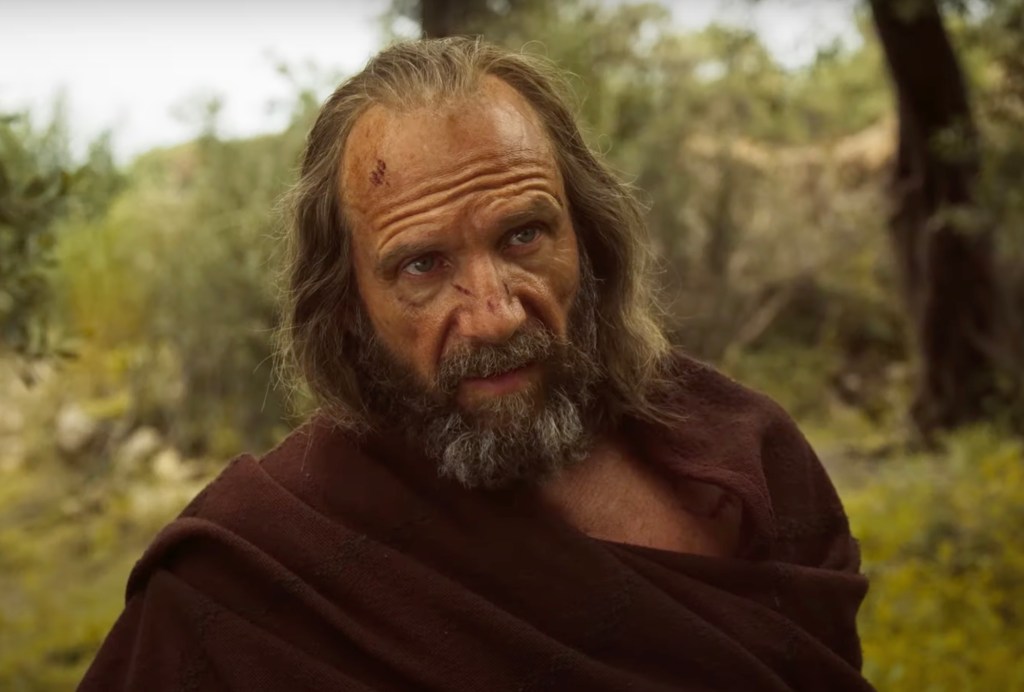
    Ralph Fiennes and Juliette Binoche carry the film with quiet intensity, making us feel as though we’re watching the real Odysseus and Penelope. They settle effortlessly into their roles. Ralph, with his solid build for his age and weathered expression, perfectly embodies an older, war-worn Odysseus. It’s a tailor-made role that allows his subtlety to shine without needing grand gestures or loud declarations. Juliette, on the other hand, matches him in restraint. Her eyes speak volumes, even though her lines are few. There’s a quiet power in her presence, and she communicates so much with silence. Another standout is Marwan Kenzari as Antinous. His performance is equally nuanced, and he delivers with the same controlled strength as the English Patient pair, adding yet another layer of subtlety to the film.

    One of the most striking aspects of the film is the camera work. Pasolini chooses to shoot characters up close—tight frames on weathered faces, tired eyes, and restrained emotions. It’s an unusual choice for a historical drama, where the tendency is to lean into wide, sweeping visuals. Here, the camera doesn’t care about grandeur—it focuses on truth, discomfort, and intimacy. These characters aren’t ancient gods or statues—they’re people worn down by time, grief, and loss. Still, the emotions are not overplayed. They remain grounded, and for some, maybe too grounded. That may be appealing to some, appalling to others.

    The film is remarkably minimalistic. No CGI monsters. No elaborate fantasy elements. Just real locations, real textures, and a rawness that strips the myth down to its human core. The absence of spectacle is what makes the film unique. The minimalism in “The Return” comes through in every aspect of its production—fewer characters, limited set-pieces, and authentic settings that ground the story in something tangible. The entire film carries the pacing and aspect ratio of a neatly crafted high-budget Indie film.

    While this grounded approach is admirable and adds authenticity, the emotional weight doesn’t always translate fully to the audience. That’s mostly due to the very same groundedness. Key moments—like when the old nurse realises the king has finally returned, or when the queen instructs her son to hand the bow to his father—are shot with poetic care. The lighting is soft, the staging is quiet, and the emotions are present, but they pass by too quickly. These are scenes that should have hit harder, that carried deep narrative weight, but they feel like gentle ripples instead of waves. Films of this kind often risk becoming too quiet, too introspective, and can feel less accessible to broader audiences. Yet, despite this, “The Return” still manages to hold attention—even if only at a low, steady throttle.

    The score is subdued, and rightly so. This isn’t a sweeping, cinematic adventure. The music simply supports the emotions when needed, stepping aside when the atmosphere and the performances speak louder. It appears when it needs to, and disappears when it doesn’t—never overstaying its welcome or trying to manipulate the audience. Maybe Christopher Nolan’s upcoming Odyssey will offer a more mainstream, high-concept version of the same myth, packed with spectacle and wide appeal. But “The Return” gives us something else. It offers a slow, patient, and reflective look at a man trying to return—not just to a place, but to a version of himself that may no longer exist.

    This isn’t for everyone. It’s not designed to be. But for those who appreciate quiet, grounded cinema that respects its source material while daring to reimagine it through a more human lens, “The Return” is a deeply rewarding experience.

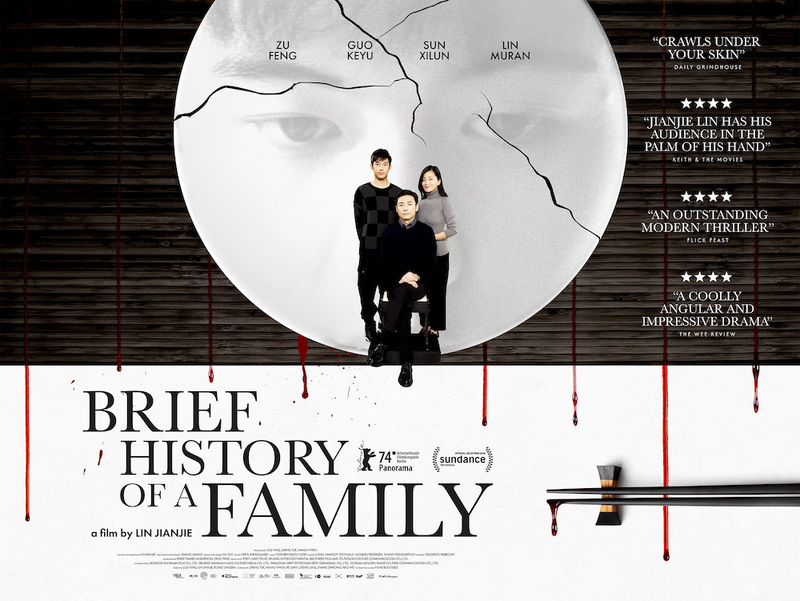
  • Brief History of a Family (2024): A Slow-Burning Mystery Rooted in Jealousy

    Brief History of a Family (2024): A Slow-Burning Mystery Rooted in Jealousy

    Rating: 3.5/5

    Lin Jianjie makes his directorial debut with “Brief History of a Family”, a suspenseful and emotionally charged drama that explores the fragile complexities of human relationships. When Yan Shuo (Played by Sun Xilun), a troubled young boy, finds refuge in the home of his classmate Tu Wei (Played by Lin Muran), it sets off a series of quiet yet devastating emotional shifts within the household.

    Beneath the surface of this slow-burn drama lies a subtle and an intricate commentary on China’s policies on abortion, birth control, and familial bonds.

    The film begins with Yan Shuo hanging from a monkey bar, an emblematic display of his perseverance—before explaining his other traits to us. His perseverance is quickly shattered, leading him to fall and we get to see Tu Wei, he comes closer to Yan to help. The mystery of who threw the ball that led to Yan’s fall lingers in the air, subtly setting the tone for the film’s underlying tensions.

    Wei’s parents are not rude but hold subtle judgments about Yan’s behaviour when they first meet him. His mother views him with a friendly curiosity, while his father believes he lacks proper manners. Their wealth has a clear influence on Wei’s behaviour—his father is deeply invested in his future—like any Asian parent, going so far as to wake up early before work to stand in line for his son’s study-abroad enrolment. However, Wei himself is more interested in spending his leisure time playing video games and watching online videos. On the other hand, Yan’s leisure activities and his relationship with his father remain unseen. The only details we learn about him are those he chooses to share with Wei’s parents.

    Yan arrives at Mr. and Mrs. Tu’s house to spend the night after his father, once “again” drunk—beats him “again”. The bruises on his body immediately evoke sympathy from Wei’s mother. When a single drop of water from the ceiling falls onto Yan’s hand, Mrs. Tu instinctively reaches out, momentarily mistaking it for a tear. In that brief yet profound moment, she offers silent comfort—an unspoken display of her deepest maternal instincts. Initially, Wei’s father is unimpressed by Yan’s lack of refinement, particularly during their first dinner together. However, the father’s perspective changes as he begins to recognise Yan’s ambition. Meanwhile, as Yan settles into the household—after Yan’s father has died, subtle power shifts begin to unfold.

    When given Wei’s clothes to wear, Yan rejects them, chucking them back at Wei—an early sign of his resistance. Wei is confused and asks what else he has to wear for the night; Yan replies directly, asking for the T-shirt Wei is wearing. A subtle symbolisation of Yan’s encroachment on Wei’s space and identity in Wei’s home.

    Yan helps out Wei’s mom in the kitchen with the cooking; Wei’s mom now loves Yan as much as she cares for her own son. Yan is being praised by Wei’s father and even going further by defending him; The three goes to a trip together, Wei is not part of “the three”. These actions gradually plant the seed of jealousy in Wei’s heart, turning what began as an act of kindness into an unspoken battle for acceptance.

    The film resists easy conclusions, mirroring the complexities of real-life relationships. Its layered storytelling makes it essential to watch until the very end to grasp its full meaning—much like a puzzle that only reveals its picture when fully assembled. While it shares thematic similarities with Saltburn, this film carves its own path, offering an emotionally rich narrative without relying on shock value or vulgarity— instead embracing the deliberate pacing of a slow-burn family drama.

    Moments of brilliance are scattered throughout the film, seamlessly woven into its mix of genres. One particularly striking scene unfolds when Wei’s parents bring out a birthday cake. The camera composition initially leads the audience to believe the celebration is for Wei, yet his sombre expression tells another story. Perhaps he is simply saddened by the growing attention his parents now shower on Yan. But in the next moment, the truth is revealed—the cake is for Yan, not Wei. It is Yan’s birthday, not his. Once a reserved couple who barely smiled during dinners, Wei’s parents are now laughing and celebrating—not for their son, but for his classmate, soon be a step-brother; because Wei’s parents want to adopt Yan. The shift is unmistakable, and in Wei’s expression, we don’t just see sadness—we see the raw, unfiltered jealousy of a 16-year-old watching his place in the family slip away.

    The film’s seamless blend of drama and thriller creates an ever-shifting focus on the characters, which at times may reduce viewer engagement. Yet, this unpredictability adds to the film’s intrigue, particularly surrounding Yan’s character. As the mystery deepens, unsettling questions are unavoidable: Is Yan the killer? Did he have a hand in his father’s death? Is his integration into the Tu family intentional, a calculated move rather than mere coincidence? Is he a parasite slowly embedding himself into their lives? And perhaps the most haunting question of all—will he kill Wei too in the end? These lingering uncertainties intensify the film’s tension, making it impossible to ignore. Comparisons to Saltburn inevitably arise, while the film’s themes and execution in the beginning also hint at the possibility of China’s “Parasite”.

    Slow-motion sequences paired with intensifying scores elevate otherwise quiet moments, adding depth and tension. The cinematography is top-notch. The film feels like an intimate view through a microscopic lens, closely examining the family’s dynamics. Similarly, Yan observes the family through his own lens, shaping his perception of them.