Category: Articles

  • Thug Life (2025): 5 Things That Went Wrong

    Thug Life (2025): 5 Things That Went Wrong

    Thug Life (2025) arrived on the heels of enormous hype — fuelled by a glittering announcement trailer, back-2-back promotional appearances by its stars all over the country, controversies over whether Kannada language came from Tamil and a debate over whether Dhee’s or Chinmayi’s rendition of “Mutha Mazhai” was superior.

    Early footage hinted at a gripping father–son drama, but the film’s momentum sputtered badly once the story shifted to present day.
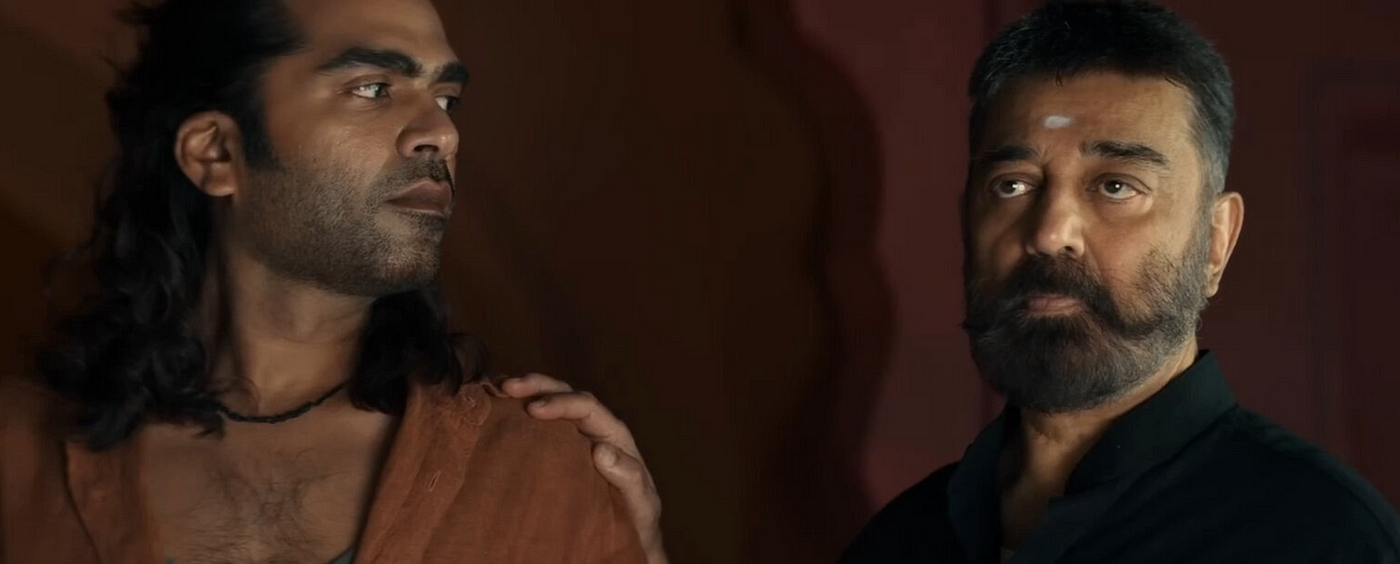
    A still from Thug Life (2025), Silambarasan (Left) and Kamal Haasan (Right)

    1. Miscast or Misused Hero

    In the flashback sequences, Rangaraja Sakthivel (played by Kamal Haasan) makes a stylish, almost mythic entrance — black‐and‐white cinematography, cool shades, top notch de-aging and a confident bearing that recall his unforgettable truth‐to‐power performance in Nayakan (1987). Yet once the palette shifts to colour, this older Sakthivel speaks and behaves like a frail elder.

    At the start, we meet Sakthivel as an aging syndicate boss who boasts that he doesn’t just survive death — he defeats it every time. After supposedly spending less than two years training in Nepal, after the betrayal — after the fall from the cliff with bullet in his body, he returns, having mastered martial arts in his twilight years and immediately dispatches one underling after another in brutal hand‐to‐hand combat. Seeing a septuagenarian transform overnight into a martial‐arts prodigy feels wildly implausible — and, for today’s audiences, downright cringe. A similar disconnect felt in Indian 2 (2024).

    2. Awkward Subplot with Indhrani

    When Sakthivel’s search for his found-son Amaran’s missing sister leads him to a brothel, the introduction of Indhrani (played by Trisha Krishnan), a strip‐dance performer, should have added emotional depth or suspense. Instead, it lands flat — and frankly awkwardly — because the film does not clarify whether Indhrani is the missing sister in the beginning; this red herring does not fit well. That narrative ambiguity might have worked if handled with subtlety, but here it only jolts the audience out of the story. For a brief moment, the real sister Chandra (played by Aishwarya Lekshmi) appears on screen — and her presence instantly outshines the awkward stripper–turned–love interest for Father and stepson.

    Another still from Thug Life (2025), Kamal Haasan

    3. Green‐Screen Overuse

    After the triumphant, practical‐effects mastery of Vikram (2022) and reuniting with director Mani Ratnam after nearly four decades, fans of three generations expected nothing less than visual cinematic fireworks. Instead, many set‐pieces — most glaringly Sakthivel’s pre-intermission showdown in Nepal — are undermined by crude green‐screen backdrops. Rather than immersive action, viewers get a surreal, almost cartoonish tableau that betrays the film’s serious tone.

    4. Disconnected Musical Score

    A.R. Rahman’s compositions remain among Indian cinema’s greatest assets, but here his songs feel shoehorned in and at odds with the drama on‐screen. The background score often swells or cuts abruptly, mismatching the narrative’s emotional beats. And though the standalone tracks (“Mutha Mazhai” included) had chart‐topping potential, they rarely integrate organically into the film’s flow.

    5. Underwhelming Antagonist Arc

    Another huge disappointment is from Silambarasan TR; he played Ethi in Chekka Chivantha Vaanam (2018) has more reasons to turn against his own brothers than Amaran turning against Sakthivel in Thug Life (2025). His efforts including growing long hair does not elevate nothing in the film. His arc, betrayal against his father, taking over the clan lack the narrative weight needed to justify the family‐saga stakes, making his eventual showdown feel perfunctory.
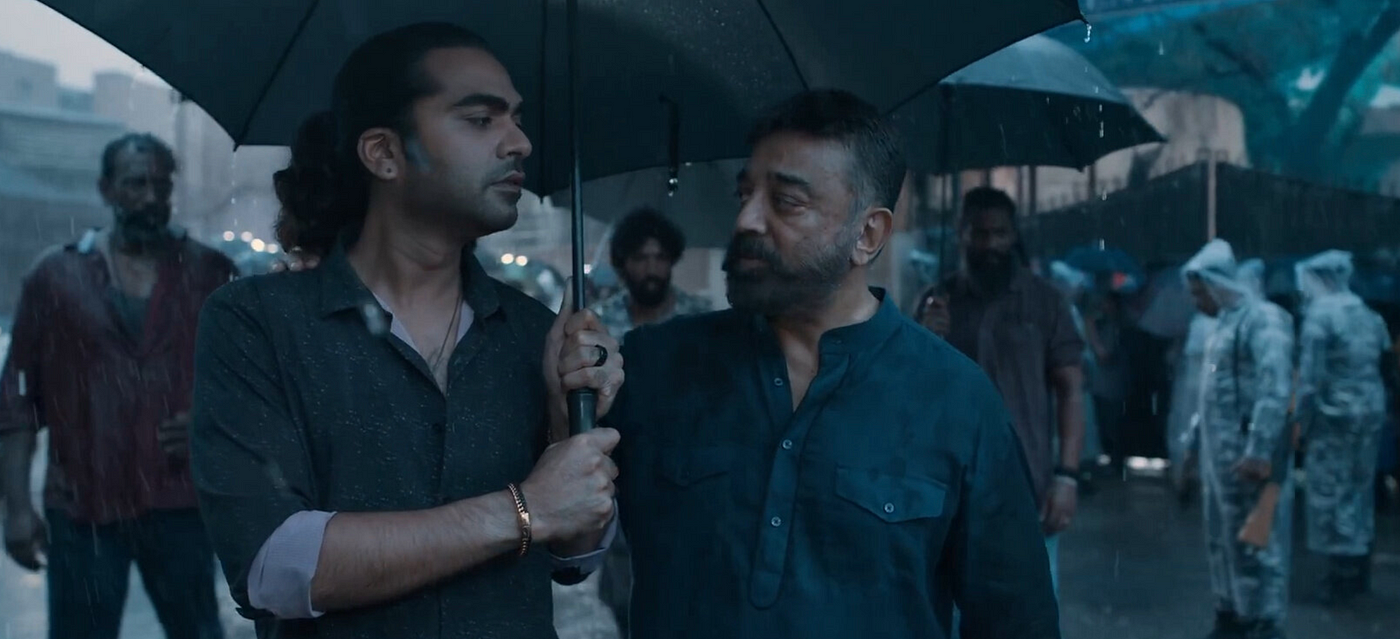
    Another still from Thug Life (2025), Silambarasan (Left) and Kamal Haasan (Right)

    Finally:

    Thug Life (2025) pinballs between high ambitions — a generational reunion of legends, a father–son epic, jaw-dropping stunts — and disappointing execution: erratic pacing, uneven sub genres, overused digital effects, underused cast and a score that never quite syncs.

    It is easy to compare the characters of Thug Life (2025) with Chekka Chivantha Vaanam (2018). Watching Thug Life will make us think, do we still want to watch new films rather than revisiting old classics, as we have enough of films already to watch for the rest of our lives?

    In Short:

    Thug Life (2025) had the potential to be a new classic; instead, it feels like a cautionary tale of dangling promise.
  • Maaveeran (2023): Brilliant writing in a recent Tamil mainstream

    Maaveeran (2023): Brilliant writing in a recent Tamil mainstream

    Two men. Two voices. One driven by fear, the other by frustration. Both resisting. Both being led to a place they refuse to go—who reached where?

    Our protagonist in this film is a coward—one who avoids confrontation at all costs, even when he is the victim or when his mother and sister face difficult situations, including harassment. Apart from his skill of being a coward 24/7, he is a comic artist, sketching for a daily magazine, struggling to find a permanent job. He needs to feed himself and two more mouths at home.

    Sathya (played by Sivakarthikeyan) creates a fictional world for newspaper column where his sketched protagonist is everything he is not—a great warrior, a fearless leader who stands against the evil, fights for his own people, and embraces the courage to die for his land and for his community. An alter ego of Sathya emerges naturally and unintentionally as he sketches—only for daily wages. A reflection of the man he never wishes and wants to be, yet he showcases this better version of himself to the world through art. Only his love interest notices it and motivates him to become one. But did he become one?

    Later, our cowardly protagonist is forced to confront his fate after an accident—when he decides to take his own life; he begins hearing a strange voice, the voice saves him from suicide, starts whispering instructions about the near future only in Sathya’s ears.

    Fear consumes Sathya. Why him? Why this voice? He can’t stop questioning it. He just wants the voice to stop. But then, the voice tells him something terrifying—he is destined to sacrifice his life for his people. Now, Sathya doesn’t just want the voice to stop; he wants to survive.

    A voice that saved him from death can lead him to die?

    Watch “Maaveeran” in Prime

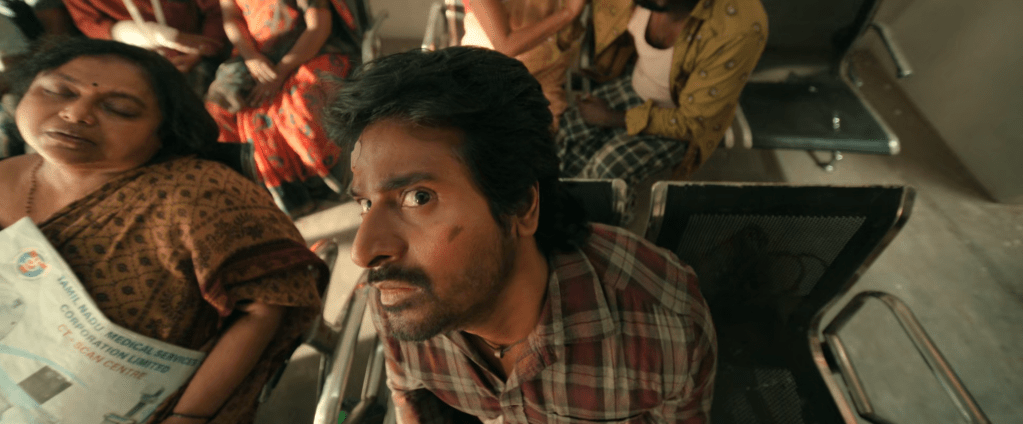
    A still from “Maaveeran” (2023)

    The most fascinating detail in this story is that, just like the protagonist, the antagonist hears a voice too. Unlike Sathya, the villain knows who the voice belongs to and where it comes from—yet at some point, it becomes overwhelming for him. The one thing the hero and the villain have in common is neither fully understands the advantage the voice holds.

    The hero’s battle with the voice occupies most of the film’s runtime, intertwined with a subplot of political corruption—housing developments forcing people out of their native lands, relocating them to poorly built high-rises, only to reveal that the structures are as fragile as a child’s Lego tower.

    But the question remains: Is Sathya truly a warrior if he simply follows the voice’s commands, even if he gives his life for people he once never cared for? Or is real strength found in questioning it, in fighting against it until he understands why it led him here? Only when he breaks free from his selfishness, his cowardice, his unwillingness to stand for something greater, does he become what his mother always wished for—a brave young man. Only then does he prove to his sister that he can fight for her, protect her—not just for them, but for their community, for those who have no one else to fight for them.

    Before the third act, both the protagonist and the antagonist lose their voices. One can’t bear the continuous humiliation of being stripped of his power in front of his employees. The other? Sathya still wants to stay selfish, still wants to care about no one but himself. And yet, despite their resistance, they both lose their hearing. The voices fall silent.

    Both reach a state of neutrality—now fully accountable for their actions. Our hero suddenly realizes the impact of not listening to the voice, and this void makes him look closer at where he stands, understanding that the ship is about to sink. The antagonist, now free of commands and control, acts erratically, making foolish decisions that lead to his downfall sooner than expected. Sathya’s realisation may be cliché, but it’s unavoidable for a ‘rise of a hero’ story.

    Watch “Maaveeran” in Prime

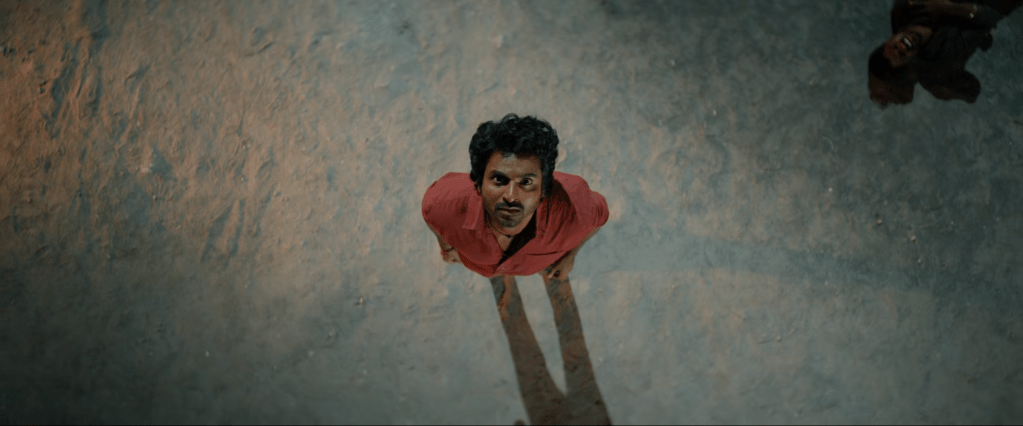
    Another still from “Maaveeran” (2023)

    Sathya overcomes his fear, his shell. He stands up for his people. And he almost dies saving them. In the end, he becomes a great warrior—but not because of the voice. Because of himself. The voice has served its purpose. Sathya now understands: he may not have been chosen one, but he has found his purpose. He was always a warrior, buried under layers of fear, voluntarily blinding himself to the corruption around him. He just needed to see it and the voice aided him to muster up his courage.

    In the end, Sathya saves his people by nearly dying, like what the voice predicted—but he hears nothing, not his mother, not his people, not anything. He loses his hearing—except the voice. He and the voice become a single entity. Beyond its subtlety, this is a perfect setup for a Marvel Studios-esque superhero origin story.

    Watch “Maaveeran” in Prime

    Another still from “Maaveeran” (2023)

    Apart from the underwhelming female lead, who only exists to serve a romantic song, and the subjective comedy track around the faulty housing project, the soundtrack and cinematography stand taller than those poorly constructed government buildings meant for the poor.

    The writer of the film is a National Award winner for his debut feature—a sharp, satirical socio-political comedy-drama. In his second film Maaveeran, he doesn’t falter in creativity. Perhaps the box office numbers and general reviews didn’t match the expectations, but for a mainstream film, this is a brilliant piece of work that received only an average response—too subtle, too intelligent to be fully appreciated by a broad audience. Few online communities keep appreciating this film—maybe we still need to wait for this to become a classic or maybe not.

    You don’t always need complex screenplays packed with unimaginable twists placed at unpredictable moments in a known film’s runtime. A well-crafted, entertaining, old-school cat-and-mouse, hero vs. villain, or rise-of-a-hero story can still be brilliant in the mainstream space.

    Watch “Maaveeran” in Prime

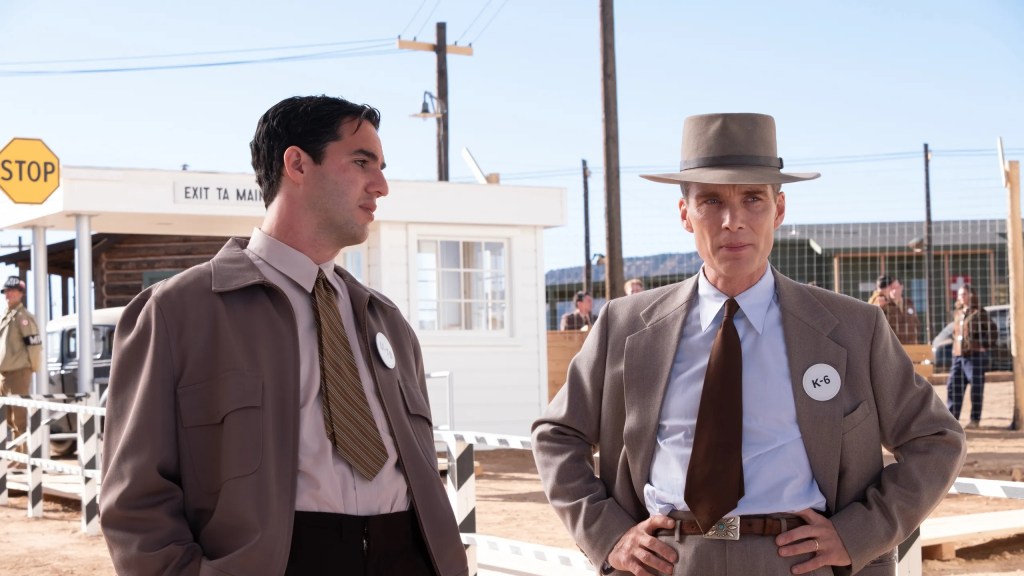
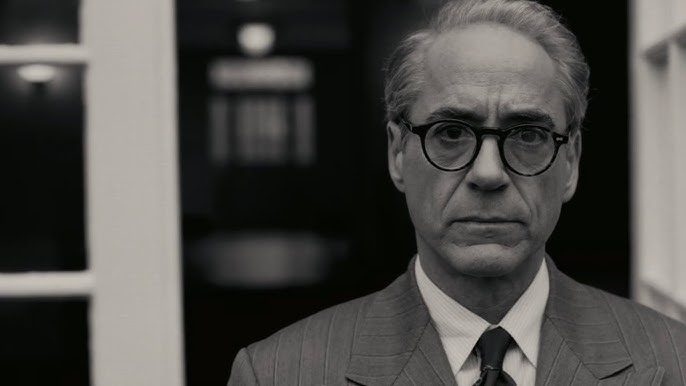
  • Oppenheimer (2023): Curiosity and the Cat—Who Kills Who?

    Oppenheimer (2023): Curiosity and the Cat—Who Kills Who?

    “Theory will only take you so far” this quote from the film gives me an idea that it is a fusion of one’s limited knowledge and boundless curiosity.

    Rewatching Oppenheimer, I discovered what I had missed the first time—blame it on the long narrative or my own ignorance, it was not easy to digest what I consumed in my first time viewing of Oppenheimer in 2023. The film, based on the book American Prometheus, is not just about the man who invented atomic bomb—it’s about his internal contradictions, his insatiable thirst, and the cost of his ambitions—I see this as his “curiosity”.

    Oppenheimer is undoubtedly one of history’s most complex—and perhaps controversial—figures. But his brilliance and his relentless curiosity knew no bounds; those sleepless nights in the prologue, during his learning phrase, didn’t know what his curiosity was about to leash when it would get the whole flesh and bones.

    It is shown to us that Oppenheimer was a fast learner. He could master a new language in weeks just to deliver a technical and scientific speech in it to native speakers—apart from attracting others with his impressive scientific brain, he continued to impress his peers with other skills too. I may not share his level of intellectual prowess, but I was able to recognise his drive for the innovation, the same way General Leslie Groves did in the movie, played by Matt Damon.

    Buy Oppenheimer on Amazon

    Curiosity as a Double-Edged Sword

    Maybe it is because a historical and scientific drama about an invention—almost all the characters beyond having their own interest, all seek some sort of “curiosity”. The curiosity in exploring what Oppenheimer is doing in Los Alamos; whether or not Oppenheimer was being a spy to American rival nations; how was his relationship with Jean and how she died. One after the other, these curious questions made the movie more gripping and engaging even for a rewatch and made me think more about “curiosity” in general.

    I didn’t just learn passion or innovation can be both inspiring and destructive from Oppenheimer (2023), but innovation is inspiringly destructive itself. We pursue our creative ambitions with such intensity that they consume us one day. Oppenheimer’s inability to rest, his compulsion to push forward, is something beyond my understanding. There are nights when my ideas won’t let me sleep—when the desire to create overrides everything else. But where does that pursuit lead? When does ambition become self-destructive? When does a creator become the villain for his own innovation and to himself? Even the greatest scientific minds the Earth ever seen may not answer to this.

    Strauss, Teller, and the Cost of Curiosity

    While Oppenheimer is dealing with his scientific curiosity, Lewis Strauss is seeking his own downfall, perhaps his self-destruction out of his own curiosity. Almost, during the testing, as soon as the bomb detonated, the audience’s expectations in the Cinemas would have left their bodies too—purpose of most of the audience might have been fulfilled seeing the bomb goes off. But the film still had one fresher act to unfold—the cold war between Strauss and Oppenheimer.

    The insult in front of audience is a just a fuel to Strauss’s pre-existing curiosity; the curiosity of how scientific minds work—especially for a non-technical person that would make them feel inferior. His obsession with uncovering Oppenheimer’s private conversation with Einstein—his unrelenting curiosity that they might have talked about him—leads to face the trial that goes out of his control; his calculated moves now become subject to question—Strauss bomb didn’t go off like the one Oppenheimer built for three years.

    While we talk about obsession over a subject—I still want to address the interest and obsession as a “curiosity”; as all part of one large spectrum. The movie showed the lack of curiosity could also play a role as a factor which would help in a character’s defeat. It was Edward Teller’s curiosity about hydrogen bomb.

    In the film, it is shown to us that all the scientists involved in the Manhattan project including Oppenheimer barely showed any interest in Teller’s idea—even ridiculed his vision. The amalgamation of embarrassment and curiosity of a person has the potential to steer towards a man’s ruination—sounds familiar?

    Like Strauss, Teller’s impact on Oppenheimer is huge. At some point, Oppenheimer agrees to meet every week an hour to discuss about Teller’s recent finding about Hydrogen bomb—Not that Oppenheimer was interested in it but he needed Teller to bring his creation into this world, not Teller’s. This Oppenheimer’s disinterest in Teller’s curiosity cost him a valuable ally—someone who could have defended him during the security clearance hearings. Had Teller’s curiosity acknowledged, he might have spoken in Oppenheimer’s favour, helping to clear his security clearance and secure the recognition and accolades he deserved for his contributions to his country—after all Oppenheimer’s innovations are only meant to save America, make America proud and stronger; instead of getting bad reputation among his fellow Americans.

    Buy Oppenheimer on Amazon

    What Ifs and the Nature of Curiosity

    Curiosity is not just about discovery—it also fuels betrayal. The hypothetical questions are always unavoidable and unreasonable to even think about, but this comes from “my curiosity” to think and couldn’t stop pondering about the consequences of a lot of “what ifs”.

    What if Einstein had stopped and spoken to Strauss instead of walking past him? What if the scientific community had embraced Teller’s ideas, altering the course of history? The film suggests that circumstances, more than inherent evil, push individuals toward choices they might not have otherwise made. Strauss’s obsession, Teller’s resentment, and Oppenheimer’s blind spots all stem from their own curiosities, and ultimately, their downfalls are shaped by them.

    Beyond the external betrayals and conflicts, Oppenheimer delves into the internal cost of curiosity. The film presents a man haunted by the consequences of his creation, a mind unravelling under the weight of guilt and recognition. His famous words, “Now I am become Death, the destroyer of worlds,” take on a new meaning as he realises the lasting impact of his own work. It is not just about the immediate destruction of Hiroshima and Nagasaki, but the precedent he set for future wars. The arms race begins, the Cold War looms, and Oppenheimer is left staring into the abyss of what he has unleashed.

    Conclusion: The Inevitable Cycle of Creation and Destruction

    Buy Oppenheimer on Amazon

    His moral struggles, and his ultimate isolation from the community paint a picture of a man who could no longer control the consequences of his own curiosity. Once his sleepless nights for the “curiosity” to discovering a new world leads him to an innovation that man-kind ever seen; and in the end, the same curiosity gives him sleepless nights of resentments and guilt.

    Oppenheimer’s story is one of contradictions: a man who sought knowledge but unleashed destruction, a patriot who was cast aside by his own country. The film illustrates how curiosity, when left unchecked, goes out of control, can be both inspiring and ruinous. The same force that drives us to create can also lead to our undoing. In the end, self-destruction is not just a consequence of ambition—it is an inevitable creation of mankind itself, starts from “curiosity”.

    Buy Oppenheimer on Amazon