Rating: 3.5/5
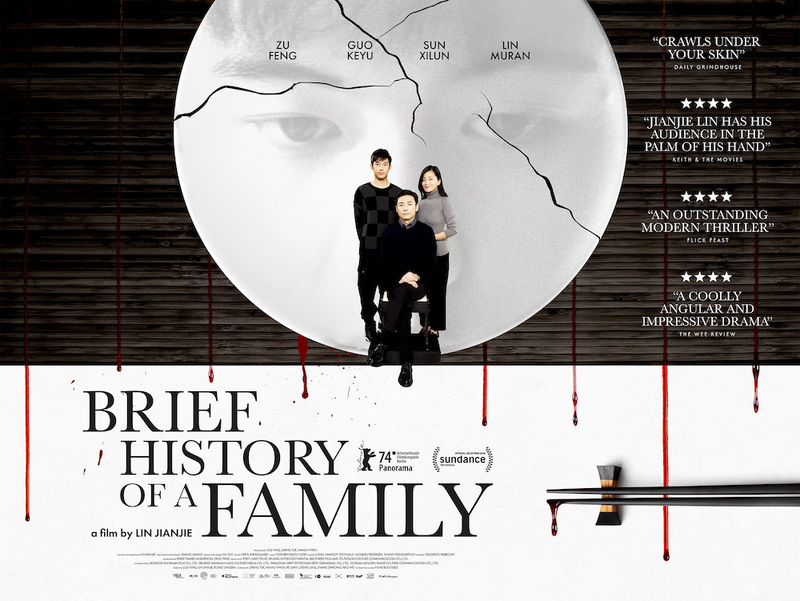
Lin Jianjie makes his directorial debut with “Brief History of a Family”, a suspenseful and emotionally charged drama that explores the fragile complexities of human relationships. When Yan Shuo (Played by Sun Xilun), a troubled young boy, finds refuge in the home of his classmate Tu Wei (Played by Lin Muran), it sets off a series of quiet yet devastating emotional shifts within the household.
Beneath the surface of this slow-burn drama lies a subtle and an intricate commentary on China’s policies on abortion, birth control, and familial bonds.
The film begins with Yan Shuo hanging from a monkey bar, an emblematic display of his perseverance—before explaining his other traits to us. His perseverance is quickly shattered, leading him to fall and we get to see Tu Wei, he comes closer to Yan to help. The mystery of who threw the ball that led to Yan’s fall lingers in the air, subtly setting the tone for the film’s underlying tensions.
Wei’s parents are not rude but hold subtle judgments about Yan’s behaviour when they first meet him. His mother views him with a friendly curiosity, while his father believes he lacks proper manners. Their wealth has a clear influence on Wei’s behaviour—his father is deeply invested in his future—like any Asian parent, going so far as to wake up early before work to stand in line for his son’s study-abroad enrolment. However, Wei himself is more interested in spending his leisure time playing video games and watching online videos. On the other hand, Yan’s leisure activities and his relationship with his father remain unseen. The only details we learn about him are those he chooses to share with Wei’s parents.
Yan arrives at Mr. and Mrs. Tu’s house to spend the night after his father, once “again” drunk—beats him “again”. The bruises on his body immediately evoke sympathy from Wei’s mother. When a single drop of water from the ceiling falls onto Yan’s hand, Mrs. Tu instinctively reaches out, momentarily mistaking it for a tear. In that brief yet profound moment, she offers silent comfort—an unspoken display of her deepest maternal instincts. Initially, Wei’s father is unimpressed by Yan’s lack of refinement, particularly during their first dinner together. However, the father’s perspective changes as he begins to recognise Yan’s ambition. Meanwhile, as Yan settles into the household—after Yan’s father has died, subtle power shifts begin to unfold.
When given Wei’s clothes to wear, Yan rejects them, chucking them back at Wei—an early sign of his resistance. Wei is confused and asks what else he has to wear for the night; Yan replies directly, asking for the T-shirt Wei is wearing. A subtle symbolisation of Yan’s encroachment on Wei’s space and identity in Wei’s home.
Yan helps out Wei’s mom in the kitchen with the cooking; Wei’s mom now loves Yan as much as she cares for her own son. Yan is being praised by Wei’s father and even going further by defending him; The three goes to a trip together, Wei is not part of “the three”. These actions gradually plant the seed of jealousy in Wei’s heart, turning what began as an act of kindness into an unspoken battle for acceptance.
The film resists easy conclusions, mirroring the complexities of real-life relationships. Its layered storytelling makes it essential to watch until the very end to grasp its full meaning—much like a puzzle that only reveals its picture when fully assembled. While it shares thematic similarities with Saltburn, this film carves its own path, offering an emotionally rich narrative without relying on shock value or vulgarity— instead embracing the deliberate pacing of a slow-burn family drama.
Moments of brilliance are scattered throughout the film, seamlessly woven into its mix of genres. One particularly striking scene unfolds when Wei’s parents bring out a birthday cake. The camera composition initially leads the audience to believe the celebration is for Wei, yet his sombre expression tells another story. Perhaps he is simply saddened by the growing attention his parents now shower on Yan. But in the next moment, the truth is revealed—the cake is for Yan, not Wei. It is Yan’s birthday, not his. Once a reserved couple who barely smiled during dinners, Wei’s parents are now laughing and celebrating—not for their son, but for his classmate, soon be a step-brother; because Wei’s parents want to adopt Yan. The shift is unmistakable, and in Wei’s expression, we don’t just see sadness—we see the raw, unfiltered jealousy of a 16-year-old watching his place in the family slip away.
The film’s seamless blend of drama and thriller creates an ever-shifting focus on the characters, which at times may reduce viewer engagement. Yet, this unpredictability adds to the film’s intrigue, particularly surrounding Yan’s character. As the mystery deepens, unsettling questions are unavoidable: Is Yan the killer? Did he have a hand in his father’s death? Is his integration into the Tu family intentional, a calculated move rather than mere coincidence? Is he a parasite slowly embedding himself into their lives? And perhaps the most haunting question of all—will he kill Wei too in the end? These lingering uncertainties intensify the film’s tension, making it impossible to ignore. Comparisons to Saltburn inevitably arise, while the film’s themes and execution in the beginning also hint at the possibility of China’s “Parasite”.
Slow-motion sequences paired with intensifying scores elevate otherwise quiet moments, adding depth and tension. The cinematography is top-notch. The film feels like an intimate view through a microscopic lens, closely examining the family’s dynamics. Similarly, Yan observes the family through his own lens, shaping his perception of them.
 Incomplete Reviews
Leave a comment